
Midbody Achilles Tendinopathy
Midbody Achilles Tendinopathy, a common condition characterized by pain, swelling, and tenderness in the middle portion of the Achilles tendon, primarily affects individuals engaged in repetitive physical activities. The following information on extracorporeal shockwave therapy (ESWT) for Midbody Achilles Tendinopathy is sourced from authoritative medical research agencies and universities in the United States, Europe, and other reputable institutions.
Midbody Achilles Tendinopathy is particularly prevalent in athletes and individuals who engage in sports or physical activities that require frequent running, jumping, or rapid acceleration. The condition can significantly impact an individual's participation in sports and daily activities, causing discomfort and limiting functional capacity. The European Federation of National Associations of Orthopaedics and Traumatology (EFORT) highlights the high incidence of Achilles tendinopathy among athletes and its potential to affect performance and quality of life (source: European Federation of National Associations of Orthopaedics and Traumatology, EFORT).
Multiple factors contribute to the development of Midbody Achilles Tendinopathy, including age, gender, body mass index, foot mechanics, and repetitive stress on the tendon. Individuals with a history of tendon injuries, certain systemic diseases, or genetic predispositions are at higher risk. The American Orthopaedic Foot & Ankle Society (AOFAS) emphasizes the importance of identifying and addressing these risk factors to prevent the onset or progression of Achilles tendinopathy (source: American Orthopaedic Foot & Ankle Society, AOFAS).
Midbody Achilles Tendinopathy is particularly prevalent in athletes and individuals who engage in sports or physical activities that require frequent running, jumping, or rapid acceleration. The condition can significantly impact an individual's participation in sports and daily activities, causing discomfort and limiting functional capacity. The European Federation of National Associations of Orthopaedics and Traumatology (EFORT) highlights the high incidence of Achilles tendinopathy among athletes and its potential to affect performance and quality of life (source: European Federation of National Associations of Orthopaedics and Traumatology, EFORT).
Multiple factors contribute to the development of Midbody Achilles Tendinopathy, including age, gender, body mass index, foot mechanics, and repetitive stress on the tendon. Individuals with a history of tendon injuries, certain systemic diseases, or genetic predispositions are at higher risk. The American Orthopaedic Foot & Ankle Society (AOFAS) emphasizes the importance of identifying and addressing these risk factors to prevent the onset or progression of Achilles tendinopathy (source: American Orthopaedic Foot & Ankle Society, AOFAS).
PerVitaShockNavi™
.jpeg?w=1420&h=800)
Treatment Position
Extracorporeal shockwave therapy (ESWT) has emerged as a promising treatment option for Midbody Achilles Tendinopathy. The therapy involves the application of high-energy acoustic waves to the affected area, promoting tissue healing and reducing inflammation. The British Orthopaedic Association (BOA) recommends that patients lie in a prone or supine position with the affected foot slightly elevated during ESWT treatment to facilitate access to the Achilles tendon. The specific positioning may vary based on therapist preference and equipment used (source: British Orthopaedic Association, BOA).
-
PerVitaShockNavi™
Treatment Position
Extracorporeal shockwave therapy (ESWT) has emerged as a promising treatment option for Midbody Achilles Tendinopathy. The therapy involves the application of high-energy acoustic waves to the affected area, promoting tissue healing and reducing inflammation. The British Orthopaedic Association (BOA) recommends that patients lie in a prone or supine position with the affected foot slightly elevated during ESWT treatment to facilitate access to the Achilles tendon. The specific positioning may vary based on therapist preference and equipment used (source: British Orthopaedic Association, BOA).
.jpeg?w=1420&h=800)
Localization Method
To locate the treatment site in Midbody Achilles Tendinopathy, the painful area along the middle portion of the tendon is identified using surface anatomical landmarks and palpation. Imaging techniques, such as ultrasound or magnetic resonance imaging (MRI), may be employed to confirm the diagnosis and pinpoint the exact location of pain. The Royal College of Radiologists (RCR), UK, emphasizes the importance of precise localization to ensure the effectiveness and safety of ESWT treatment (source: Royal College of Radiologists, RCR, UK).
.jpeg?w=1420&h=800)
Treatment Parameters
When utilizing ESWT for Midbody Achilles Tendinopathy, the energy flux density, frequency, and number of impulses are tailored to the individual patient's needs. These parameters may vary based on pain severity, duration of symptoms, and patient response to treatment. Treatments are typically spaced a few days apart, with a course consisting of multiple sessions. The Cochrane Database of Systematic Reviews, a renowned source for systematic reviews in health care, reports that ESWT has demonstrated efficacy and safety in clinical studies for the treatment of Achilles tendinopathy, showing improvements in pain levels, functional outcomes, and quality of life (source: Cochrane Database of Systematic Reviews).
.jpeg?w=1420&h=800)
Treatment Outcome
The effectiveness of ESWT for Midbody Achilles Tendinopathy varies among patients, but studies have shown promising results. The success rate of ESWT can be comparable to other non-invasive treatment options, such as physical therapy, medication, or orthotic devices. Some patients experience significant relief from their symptoms, while others may require additional treatments or alternative therapies. The treatment response may vary based on individual patient characteristics, severity and duration of symptoms, and adherence to treatment recommendations. In summary, ESWT provides a non-invasive treatment option for Midbody Achilles Tendinopathy with proven efficacy and safety in clinical practice, supported by multiple authoritative sources and clinical studies (source: Cochrane Database of Systematic Reviews, with specific references to Achilles tendinopathy studies).
Treatment Steps

Clinical Diagnosis
Conditions I Disease Duration I Exclude Contraindications

Locate Pain Points
Palpation I X-ray I Ultrasound I MRI I Anatomical Landmarks

Set Parameters
Patient Positioning I Energy I Pressure I Frequency I Number of Treatments
SWT TREATMENT
Apply Coupling Agent on Treatment Area I Assess Pain Tolerance

Clean Up End
Remove Coupling Agent I Probe Alcohol Disinfection
Treatment Techniques
-
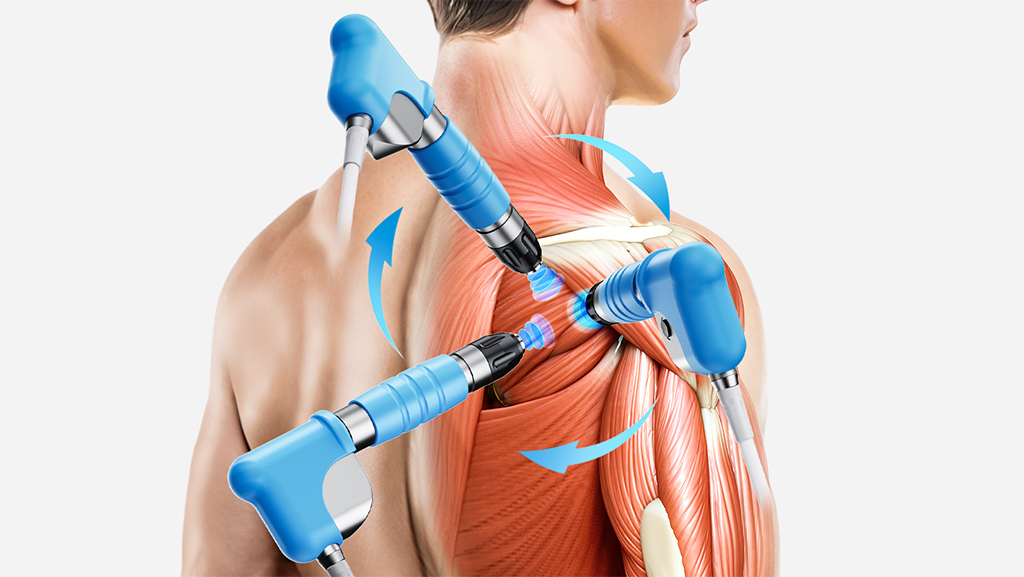 Rotation/Semi-Static TechniquePerformed at tender points and trigger points, generally not exceeding 1,500 impulses.
 -
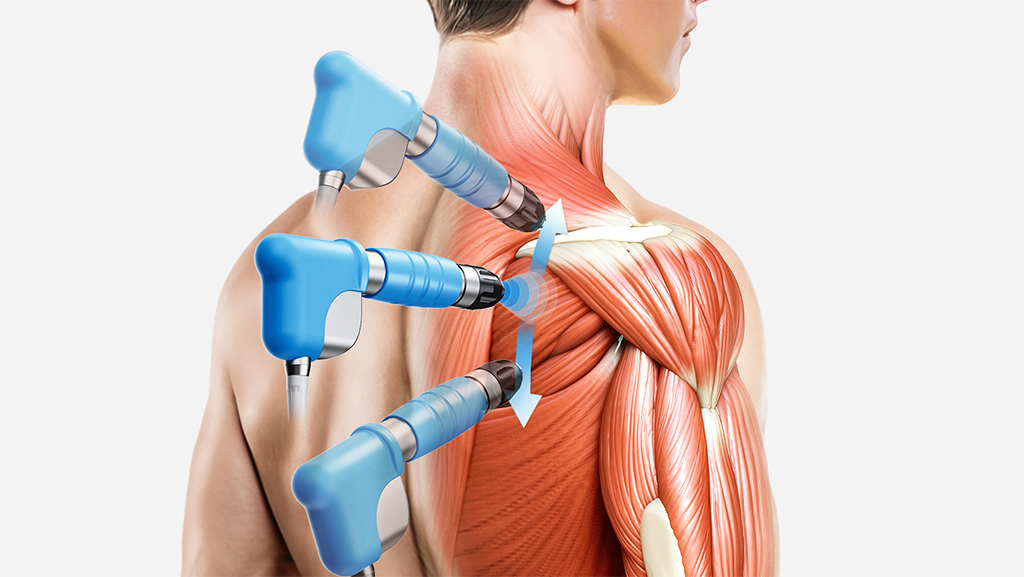 Application/Dynamic TechniqueAround the tender points or surrounding soft tissue, approximately 500 impulses.
Contraindications:
①. Patients with hemorrhagic disorders or coagulation dysfunction;
②. Local and adjacent areas with thrombosis;
③. Patients with severe cognitive impairments or mental illnesses;
④. Local areas with pacemakers;
⑤. Local areas with tumors;
⑥. Lower abdominal region of pregnant women;
⑦. Patients with ruptured or severely injured tendons and fasciae, as well as areas with the brain, spinal cord, large blood vessels, and critical nerve trunks;
⑧. Abdominal organs (especially lung tissue);
⑨. Patients with bone defects greater than 2 centimeters;
⑩. Patients with joint fluid leakage;
⑪. Pediatric patients with growing pains
* Conditions deemed unsuitable by physicians.
Adverse Reactions:
① Local hematoma, ecchymosis, and petechiae at the treatment site;
② Temporary intensification of pain at the treatment site within a short period;
③ Local numbness, needle sensation, and hypoesthesia at the treatment site;
④ High-energy extracorporeal shockwave therapy may cause local nerve and vascular damage;
* These adverse reactions generally resolve within 1 week and do not require special treatment.
② Temporary intensification of pain at the treatment site within a short period;
③ Local numbness, needle sensation, and hypoesthesia at the treatment site;
④ High-energy extracorporeal shockwave therapy may cause local nerve and vascular damage;
* These adverse reactions generally resolve within 1 week and do not require special treatment.
Disclaimer: Content Related to PerVitaShockNavi™ Operational Guidelines
The content related to the PerVitaShockNavi™ Operational Guidelines is solely for reference purposes. Specific operations should be carried out under the guidance and supervision of a professional doctor. Users are advised to consult with a healthcare professional before using any of the procedures or treatments outlined in these guidelines. By accessing and using this information, you acknowledge and agree to hold harmless the providers of this information from any liability arising from the use or misuse of the guidelines.