
Subacromial Pain Syndrome
Subacromial Pain Syndrome (SPS) is a condition characterized by pain, limited motion, and tenderness in the subacromial space of the shoulder joint. It is also known as rotator cuff disease, rotator cuff tendinosis, and shoulder impingement syndrome (SIS), short for shoulder impingement syndrome, which describes the pinching of the rotator cuff tendons and bursa between bones in the subacromial space.
SPS may also manifest as calcifying tendinitis of the shoulder, causing additional shoulder pain. Rotator cuff tendonitis and shoulder bursitis, both inflammation of the subacromial space, are often confused but share similar symptoms. In severe cases, SIS involves both inflammation of the rotator cuff tendons (tendonitis) and the adjacent bursa (bursitis). Often, the subacromial space is reduced in size due to bone shape variations compared to healthy individuals.
SIS is the most common form of shoulder pain. Repetitive shoulder movements during work or sports, such as swimming, throwing, tennis, weightlifting, golf, volleyball, and gymnastics, are the primary risk factors for developing SIS. Age is also a contributing factor to the development of SIS.
The primary symptoms of SPS include widespread shoulder pain, limited range of motion, and significant tenderness in the affected area.
PerVitaShockNavi™
.jpeg?w=1420&h=800)
-
PerVitaShockNavi™
.jpeg?w=1420&h=800)
.jpeg?w=1420&h=800)
.jpeg?w=1420&h=800)
Treatment Steps





Treatment Techniques
-
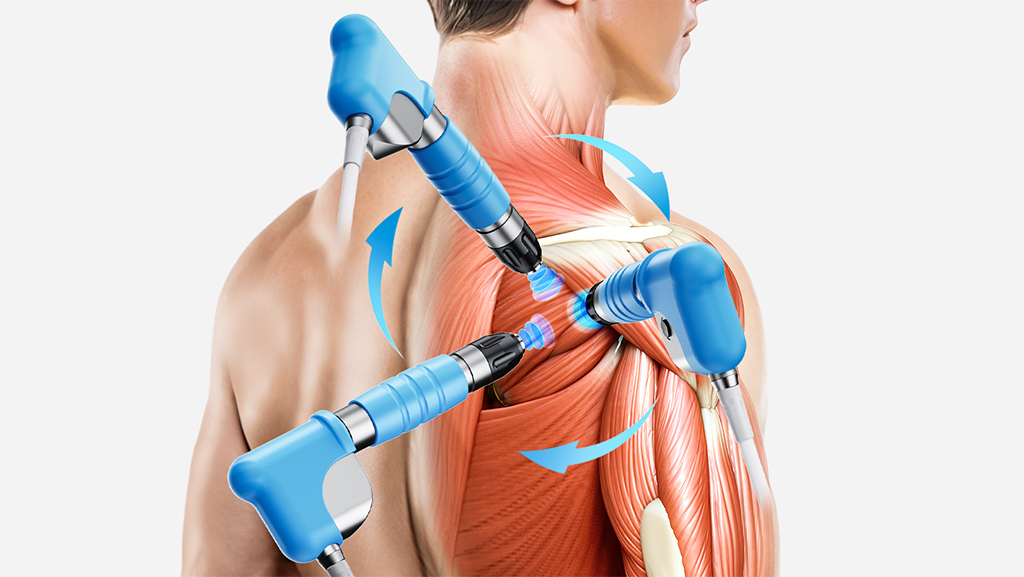 Rotation/Semi-Static TechniquePerformed at tender points and trigger points, generally not exceeding 1,500 impulses.
 -
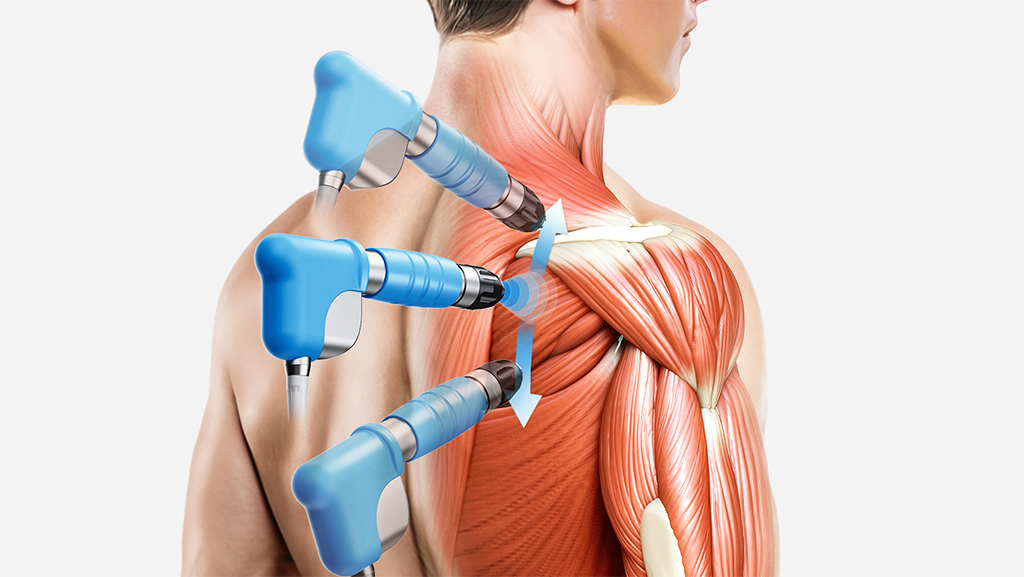 Application/Dynamic TechniqueAround the tender points or surrounding soft tissue, approximately 500 impulses.
Contraindications:
①. Patients with hemorrhagic disorders or coagulation dysfunction;
②. Local and adjacent areas with thrombosis;
③. Patients with severe cognitive impairments or mental illnesses;
④. Local areas with pacemakers;
⑤. Local areas with tumors;
⑥. Lower abdominal region of pregnant women;
⑦. Patients with ruptured or severely injured tendons and fasciae, as well as areas with the brain, spinal cord, large blood vessels, and critical nerve trunks;
⑧. Abdominal organs (especially lung tissue);
⑨. Patients with bone defects greater than 2 centimeters;
⑩. Patients with joint fluid leakage;
⑪. Pediatric patients with growing pains
* Conditions deemed unsuitable by physicians.
Adverse Reactions:
② Temporary intensification of pain at the treatment site within a short period;
③ Local numbness, needle sensation, and hypoesthesia at the treatment site;
④ High-energy extracorporeal shockwave therapy may cause local nerve and vascular damage;
* These adverse reactions generally resolve within 1 week and do not require special treatment.