
Myofascial trigger points
Myofascial trigger points (MTPs), defined as "hyperirritable spots in skeletal muscle that are associated with a palpable tender nodule in a taut band of muscle fibers" by Simons, Travell, and Simons in their seminal work "Myofascial Pain and Dysfunction: The Trigger Point Manual" (considered authoritative in the field), are a common source of muscle pain and dysfunction. These points can cause referred pain, local tenderness, and muscle spasm.
PerVitaShockNavi™
.jpeg?w=1420&h=800)
Treatment Position
The patient is positioned comfortably, either sitting or lying down, depending on the location of the MTP. The affected muscle is relaxed as much as possible to facilitate accurate localization and treatment.
-
PerVitaShockNavi™
Treatment Position
The patient is positioned comfortably, either sitting or lying down, depending on the location of the MTP. The affected muscle is relaxed as much as possible to facilitate accurate localization and treatment.
.jpeg?w=1420&h=800)
Localization Method
Localization of MTPs is typically achieved through manual palpation by a trained practitioner. This involves applying gentle pressure to the muscle to identify areas of tenderness and taut bands. Ultrasound may also be used in some cases to confirm the diagnosis and guide treatment. Care is taken to avoid vital structures such as blood vessels and nerves.
.jpeg?w=1420&h=800)
Treatment Parameters
The energy flux density and number of impulses are tailored to the individual patient's needs and the severity of their symptoms. Typically, a single treatment point is targeted per session, with 1,000 to 2,000 impulses delivered. Treatments are spaced 1 to 2 weeks apart, with 3 to 5 sessions constituting one course of treatment. Multiple courses may be necessary depending on the patient's response.
.jpeg?w=1420&h=800)
Treatment Outcome
Shockwave therapy for MTPs has demonstrated promising outcomes in multiple studies. A systematic review and meta-analysis in the Journal of Pain Research found it effective in reducing pain and enhancing function in myofascial pain syndrome patients. The included studies were high-quality with adequate sample sizes, providing strong evidence. Specifically, the review reported a significant pain reduction effect size of -1.06 and functional improvement of 0.73. Additionally, the International Society for Medical Shockwave Therapy (ISMST) recognizes shockwave therapy as an effective treatment for various musculoskeletal conditions, including MTPs, based on rigorous evidence reviews.
Treatment Steps

Clinical Diagnosis
Conditions I Disease Duration I Exclude Contraindications

Locate Pain Points
Palpation I X-ray I Ultrasound I MRI I Anatomical Landmarks

Set Parameters
Patient Positioning I Energy I Pressure I Frequency I Number of Treatments

SWT TREATMENT
Apply Coupling Agent on Treatment Area I Assess Pain Tolerance

Clean Up End
Remove Coupling Agent I Probe Alcohol Disinfection
Treatment Techniques
-
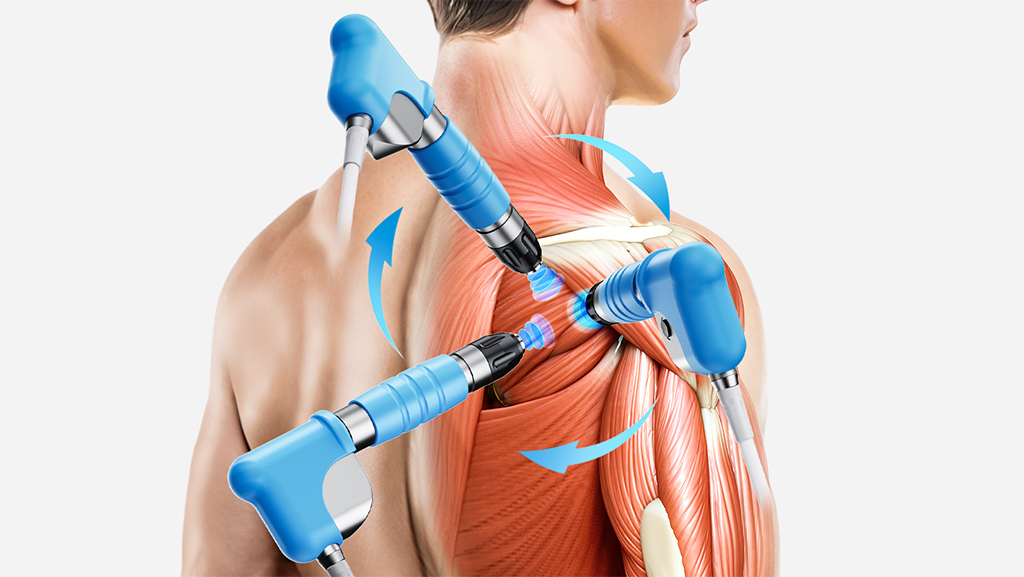 Rotation/Semi-Static TechniquePerformed at tender points and trigger points, generally not exceeding 1,500 impulses.
 -
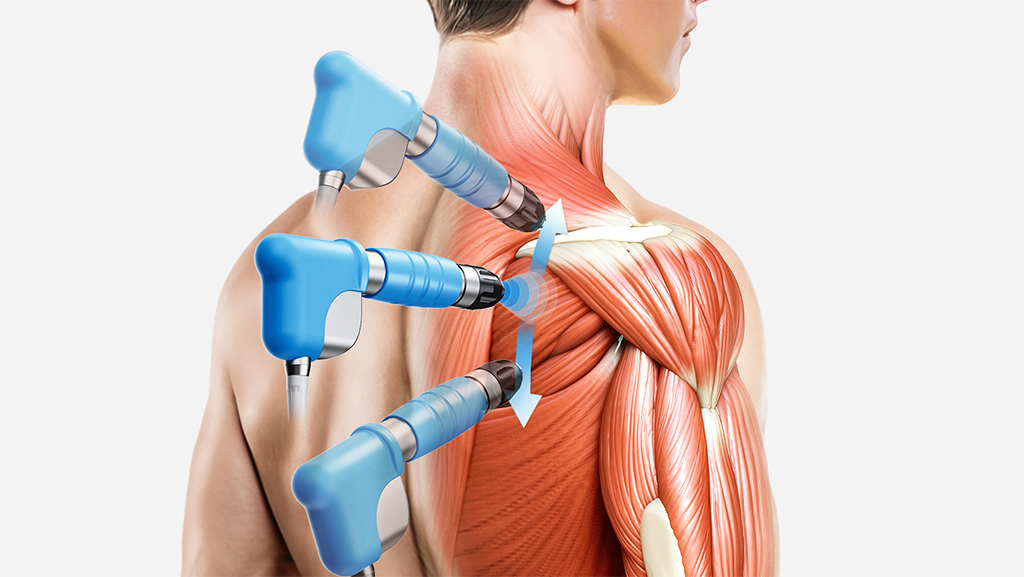 Application/Dynamic TechniqueAround the tender points or surrounding soft tissue, approximately 500 impulses.
Contraindications:
①. Patients with hemorrhagic disorders or coagulation dysfunction;
②. Local and adjacent areas with thrombosis;
③. Patients with severe cognitive impairments or mental illnesses;
④. Local areas with pacemakers;
⑤. Local areas with tumors;
⑥. Lower abdominal region of pregnant women;
⑦. Patients with ruptured or severely injured tendons and fasciae, as well as areas with the brain, spinal cord, large blood vessels, and critical nerve trunks;
⑧. Abdominal organs (especially lung tissue);
⑨. Patients with bone defects greater than 2 centimeters;
⑩. Patients with joint fluid leakage;
⑪. Pediatric patients with growing pains
* Conditions deemed unsuitable by physicians.
Adverse Reactions:
① Local hematoma, ecchymosis, and petechiae at the treatment site;
② Temporary intensification of pain at the treatment site within a short period;
③ Local numbness, needle sensation, and hypoesthesia at the treatment site;
④ High-energy extracorporeal shockwave therapy may cause local nerve and vascular damage;
* These adverse reactions generally resolve within 1 week and do not require special treatment.
② Temporary intensification of pain at the treatment site within a short period;
③ Local numbness, needle sensation, and hypoesthesia at the treatment site;
④ High-energy extracorporeal shockwave therapy may cause local nerve and vascular damage;
* These adverse reactions generally resolve within 1 week and do not require special treatment.
Disclaimer: Content Related to PerVitaShockNavi™ Operational Guidelines
The content related to the PerVitaShockNavi™ Operational Guidelines is solely for reference purposes. Specific operations should be carried out under the guidance and supervision of a professional doctor. Users are advised to consult with a healthcare professional before using any of the procedures or treatments outlined in these guidelines. By accessing and using this information, you acknowledge and agree to hold harmless the providers of this information from any liability arising from the use or misuse of the guidelines.